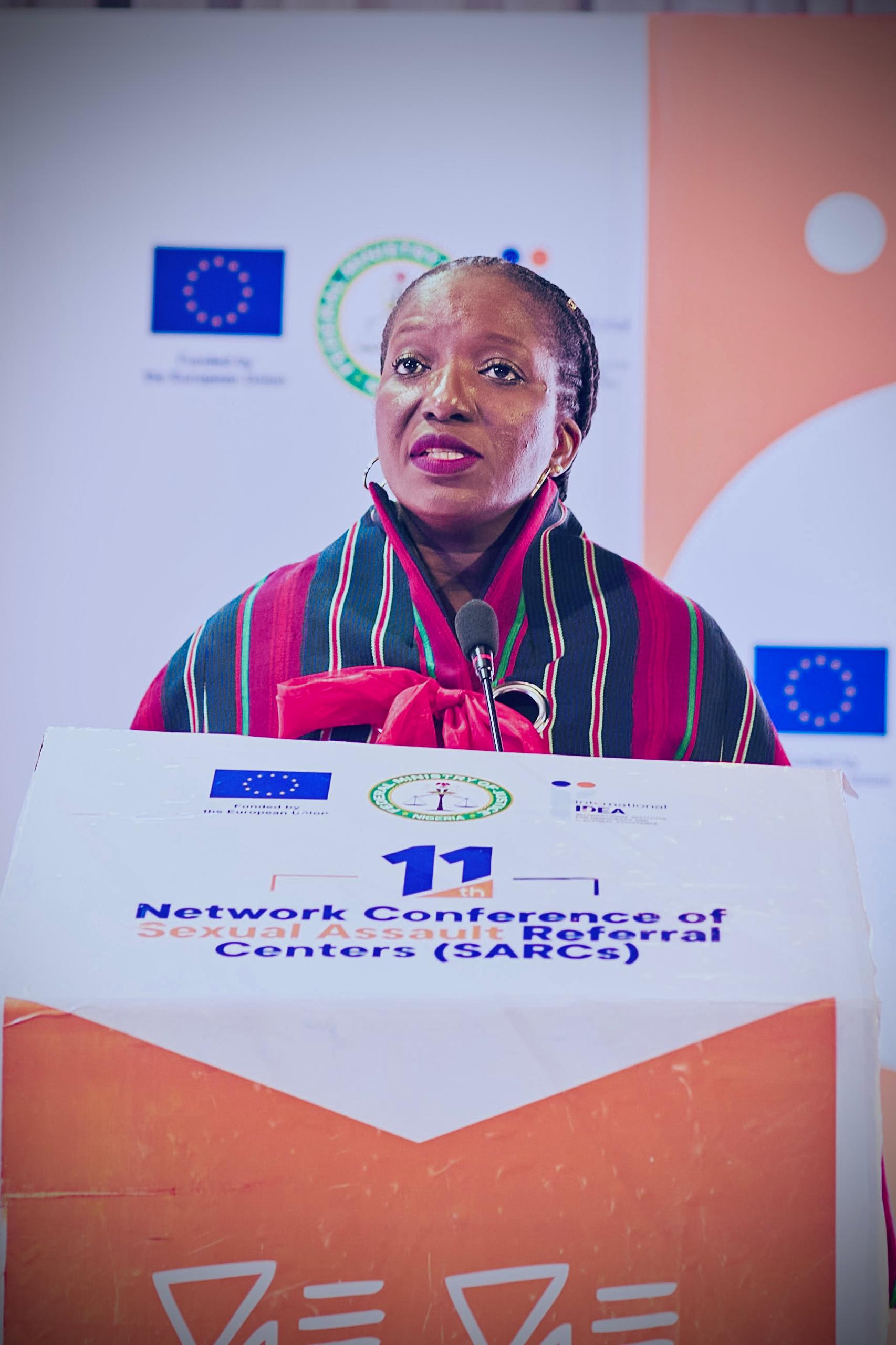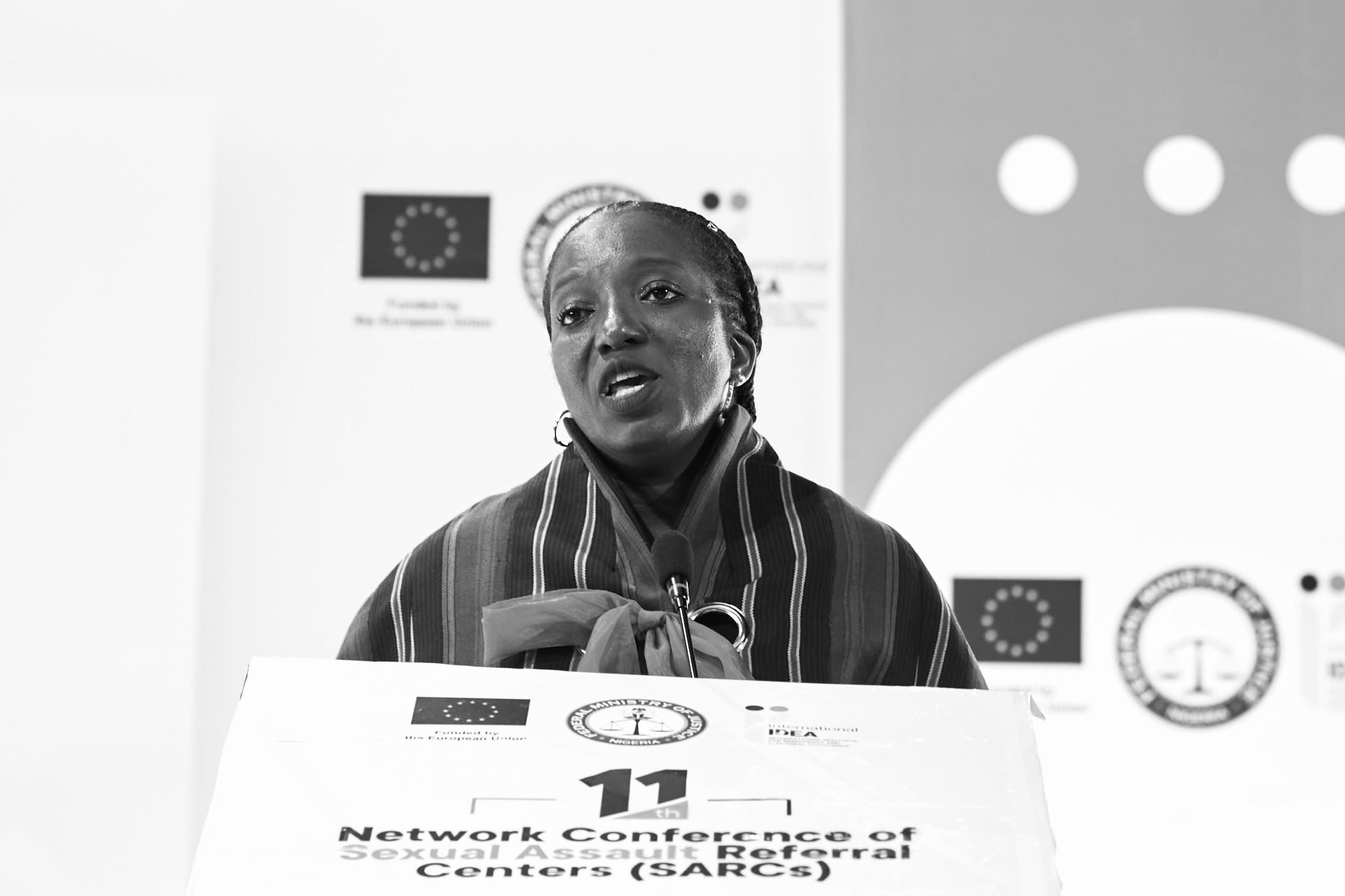

On December 2nd, 2025, Professor Fatima Waziri-Azi delivered a powerful keynote address on the growing threat of technology-facilitated gender-based violence (TFGBV) in Nigeria, at the 11th SARC Network Conference organized by International Idea in collaboration with the Federal Ministry of Justice, with funding from the European Union.
Speaking to policymakers, gender advocates, and justice-sector practitioners across federal and state levels, she highlighted how digital platforms are increasingly being used to harass, exploit, intimidate and silence women and girls; examined how online violence, ranging from sextortion and cyberstalking to image-based abuse and doxing is becoming one of the fastest-rising forms of GBV in the country.
In her address, Professor Waziri-Azi drew from real cases and national trends to illustrate the severe impact of digital abuse on survivors. She emphasised that online gender-based violence is not virtual harm, it has real emotional, physical and psychological consequences. She also unpacked the systemic gaps that hinder successful prosecution under the VAPP Act, including weak digital investigation capacity, limited coordination across justice institutions and the absence of strong survivor-protection mechanisms.
The keynote underscored the urgent need for Nigeria to strengthen its legal and policy frameworks, improve digital forensic skills within law enforcement, and ensure that GBV response systems are equipped to address both offline and online forms of violence. Professor Waziri-Azi called for survivor-centred services, technology company accountability, and improved digital literacy to help women and girls navigate online spaces safely.
Her message was clear and urgent: as technology evolves, so must Nigeria’s strategies to prevent and respond to technology-facilitated GBV. Ending violence against women and girls requires recognising the digital space as a critical arena for protection, justice and empowerment.